
Plastering
Plastering and re-skimming, done so the wall stays flat
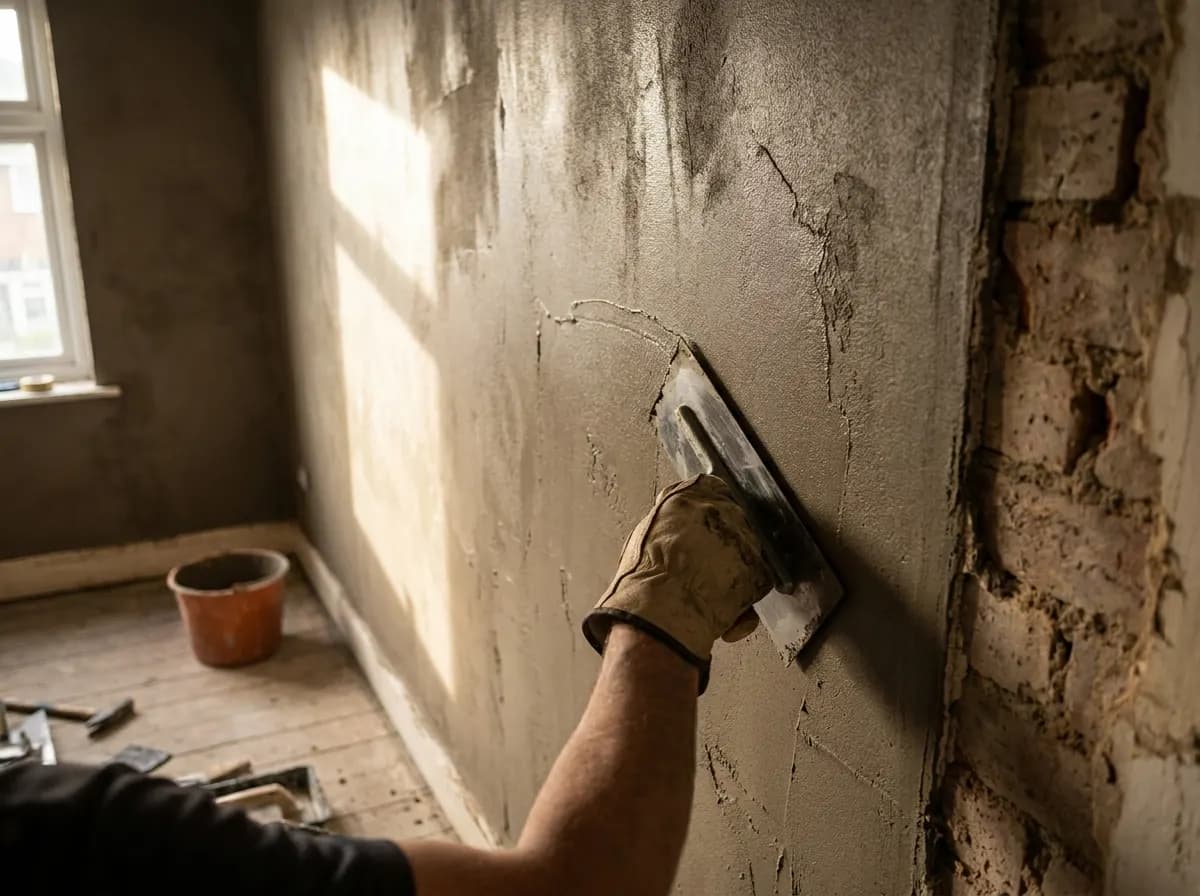
The Brighton Plasterer provides full interior plastering across Brighton, Hove and the surrounding Sussex towns. James hacks off failed plaster, applies a backing coat to true up the wall, then finishes it flat and ready for decorating, typically within two to four days for a single room.
What the work covers
Most of the plastering James takes on in Brighton starts with a wall that has already failed. Blown lime plaster behind a chimney breast, a ceiling that has parted company with its laths, or a patch of crumbling render around a replaced window. The honest answer is that patching over the top rarely lasts, so the first job is always to hack back to a sound background and see what is actually there.
From there the work is straightforward and done properly. Bonding or browning goes on as a backing coat to bring the wall true and flat, dubbed out where the old building has moved. Once that has gone off, two coats of finish plaster are laid on and trowelled up to a hard, closed surface that takes paint without a hint of the patchwork underneath.
A great many jobs are the lighter version of that, and they are just as welcome. Where the wall behind is basically sound but covered in old artex, filled patches, wallpaper scars or forty years of layered paint, it wants a re-skim rather than a full re-plaster. Surfaces are stabilised and primed to suit how porous they are, beads are set, then two coats of finish plaster go on wet on wet and are trowelled through several passes as they firm up. That final trowelling is what separates a flat wall from a wavy one, and it cannot be rushed.
Older Brighton and Hove properties need a little more thought than a new build. Lath and plaster ceilings, lime backgrounds, solid brick walls with no cavity and the odd bit of flint all behave differently, and using the wrong material on them causes problems a year later rather than a week later. James will tell you when a wall wants a breathable lime approach rather than a gypsum one, even though it is more work.
- Full re-plastering
- Failed plaster taken back to a sound background, a backing coat floated to bring the wall true, then two coats of finish trowelled up flat.
- Re-skimming
- Where the background is sound but the surface is ruined by artex, filler, wallpaper scars or layered paint, a two coat skim over a stabilised and primed wall.
- Ceilings
- Lath and plaster ceilings repaired where they can be saved and overboarded where they cannot, then finished for a modern matt emulsion.
- Making good
- Reinstatement after a rewire, a new bathroom, a removed chimney breast or a knocked through opening, matched into the existing surface.
Problems this is the answer to
- Walls that sound hollow when tapped, usually blown plaster that has parted from the brick
- Bulging or cracked ceilings in a Victorian or Edwardian property
- Artex that has to go before the room can be decorated properly
- A room stripped of wallpaper that turned out to be holding the wall together
- Fresh patches around new sockets, pipework or a replaced window that will show through paint
- A finish that looks wavy under low winter light no matter how it is painted
Included as standard
- Full re-plastering, and a lighter re-skim where the background is already sound
- Hacking off blown, damp-damaged or artexed surfaces back to a sound background
- Bonding, browning and hardwall backing coats to bring old walls true
- Lath and plaster ceiling repair and overboarding in period properties
- Ceilings flattened and finished ready for a modern matt emulsion
- Everything sheeted up, and the dust and debris taken away at the end
Before a price is given
How the job gets worked out
- 01
Tap the wall across its full height. A hollow note means the plaster has lost its key and patching over it buys a year at most.
- 02
Check what the background actually is. Solid brick, block, bungaroosh, lath, or old lime render all behave differently and take different materials.
- 03
Test how porous the surface is with water. That decides the primer and whether the finish coat will grab or slide.
- 04
Look for moisture before anything else. Plastering over a wall that is still wet wastes the work and hides the real fault.
- 05
Check whether the wall is straight enough to skim, or whether it needs a backing coat to bring it true first.
The job, in order
Nothing here is a surprise on the day. You get told which stage you are at, what happens next and what has to dry before anything else can start.
Before James arrives
- Clear the room as far as you reasonably can. Anything left behind gets sheeted, but an empty room is quicker and cheaper to work in.
- Take down curtains, blinds and light fittings, or say so and they will be taken down and left safe.
- Decide on socket and switch positions before plastering rather than after, because moving one afterwards means patching a fresh wall.
- If a room is being rewired or replumbed, book that first. Plastering is the last wet trade in and it should stay that way.
- Keep the heating available. A cold room in January adds days to drying, and painting too early traps moisture in.
01Protect and strip
Floors and remaining furniture sheeted, fittings taken off, and failed plaster hacked back to a sound background with the debris bagged as it comes off.
02Prepare the background
Beads set at corners and openings, the surface stabilised and primed to suit how porous it is, and any backing coat floated and left to go off.
03Skim in two coats
First coat laid on and flattened, second coat applied wet on wet, then several trowelling passes as it firms up. The last pass is what makes a wall flat.
04Clear and hand back
Edges cut in, beads cleaned off, waste removed the same day and the room left swept rather than left for you to deal with.
Materials and systems
What gets specified, and when
- Multi finish plaster
- The standard finish coat over plasterboard and over most backing coats. Two coats, trowelled to a closed surface that takes emulsion without a mist of patches showing through.
- Bonding and browning
- Backing coats used to build out and true up an uneven solid wall. Bonding for low suction or dense backgrounds, browning where the brick still pulls water.
- Hardwall
- A tougher backing coat for solid masonry that needs to take knocks, common in hallways, kitchens and rented property.
- Lime plaster
- Used on soft historic fabric such as bungaroosh, flint and timber frame, where a hard gypsum coat would trap moisture and damage the wall behind it.
- Bonding agents and primers
- Applied to seal high suction backgrounds, to key over sound artex and to stop a finish coat drying too fast to trowel properly.
Property types
- Regency and early Victorian houses with soft lime backgrounds
- Victorian and Edwardian terraces with lath and plaster ceilings
- Interwar and 1930s semis with solid or early cavity walls
- Flat conversions carved out of larger period houses
- Post-war and modern estate housing on plasterboard
- Extensions and loft conversions needing new work matched into old
How long it takes
- One room re-skim
- Usually a single day on site once preparation is done, with a second visit only if the room was in worse condition than it looked.
- Full re-plaster of a room
- Two to four days depending on how much has to come off, how uneven the wall is and how long the backing coat needs before the finish goes on.
- Ceiling overboard and skim
- Typically one to two days for a standard room, longer where the joists are uneven or the old ceiling has to come down first.
- Drying before decorating
- Five to seven days is the usual guide, and longer in winter, in a cold room or where a thick backing coat has gone on. Fresh plaster looks even brown before it is ready.
Straight answers
When plastering is not the right answer
If a wall is damp, plastering it is the wrong first move. Trace and fix the source, then re-plaster.
Plaster does not stop movement. A crack that is opening because the structure is moving will come back through a new skim.
Skimming over artex is fine when it is sound, but not when it is loose or when there is any doubt about what it contains.
A ceiling that has lost most of its keys is past re-fixing, and overboarding is cheaper than repairing it twice.
Where it gets done
Plastering town by town
Each page below covers plastering in that town specifically: the buildings that are there, what tends to go wrong in them and what the job actually involves locally.
The other two things James does
Plastering
Plastering questions, answered
The things people ask before booking plastering, answered properly rather than in one line.
What is the difference between plastering and skimming?
Skimming is the finish coat, a thin layer of finish plaster trowelled over a surface that is already flat and sound. Plastering usually means the whole job, including hacking off, a backing coat to true the wall up and then the skim on top.
Can you skim straight over old plaster?
Yes, as long as the old plaster is firmly attached and reasonably flat. If it sounds hollow when tapped it has lost its key, and skimming over it simply moves the failure a few millimetres outwards.
Do I need to remove wallpaper before plastering?
It has to come off. Wallpaper is not a sound background, and finish plaster applied over it will lift as the paste behind it goes soft. Stripping is included where it is part of the job.
Why does new plaster crack in the corners?
Hairline cracking at internal corners is usually shrinkage as the plaster dries and is normally cosmetic, filled at decorating stage. Repeated cracking in the same line points at movement in the structure rather than at the plaster.
How do I know when plaster is dry enough to paint?
It goes from dark brown to an even pale pink with no darker patches, including around the edges and behind radiators. A mist coat of watered down emulsion goes on first so the wall can carry on breathing.
Will you clear up afterwards?
Yes. Waste plaster and debris go with James rather than into your bin or your garden, and the room is swept before it is handed back. Old plaster from a full hack off is bagged as it comes off rather than heaped in the middle.
Can plaster be applied in cold weather?
It can, but it needs the room above freezing and it needs longer to dry. James will say if a job is better held for a week rather than plastered into a cold, unheated room where the finish will suffer.
Do you plaster over plasterboard on a new extension?
Yes, and it is the most straightforward version of the job. Joints are taped, the board is primed where the suction demands it, then two coats of finish are trowelled up ready for decorating.
What causes a wavy wall after plastering?
Almost always insufficient trowelling passes, or a finish coat that dried faster than it could be worked. On a badly out of true wall it can also mean the backing coat was skipped when the wall genuinely needed one.
Can you match plaster into an existing wall without it showing?
For a patch, yes, provided the surrounding surface is sound and flat. Where the existing wall is uneven or heavily textured, the honest answer is often that the whole wall wants skimming so the repair does not sit proud in the light.
Need plastering doing?
Describe the job and James will tell you what it actually wants, with a written price before anything starts. Covering 10 towns across Sussex.