
West Sussex, BN11 to BN14
Worthing plastering inside 1930s semis, seafront flats and Tarring cottages
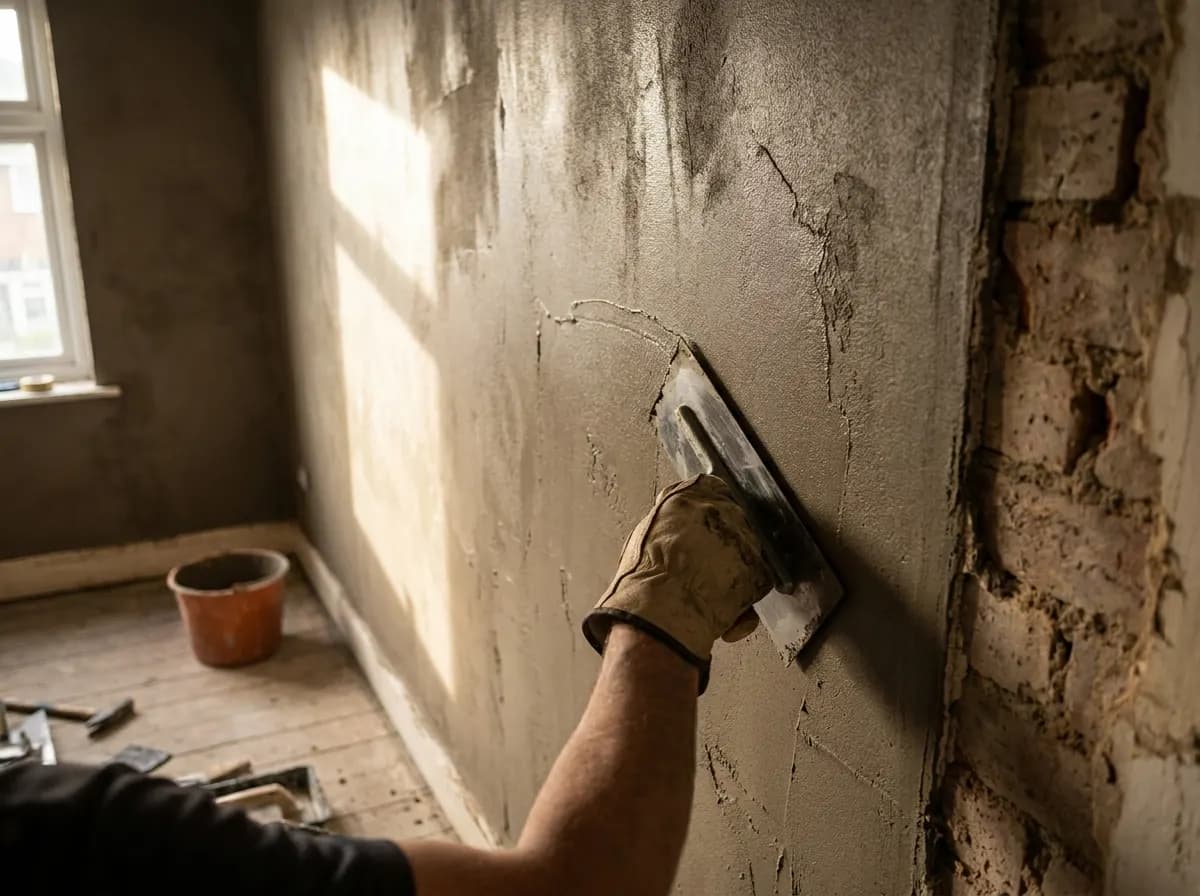
The Brighton Plasterer provides interior plastering across Worthing and the BN11 to BN14 postcodes. Most of the work sits in interwar semis through West Worthing, Goring and Durrington, where James makes good hollow and blown areas, keeps original joinery in place, and skims rooms flat and ready to decorate.
Plastering in Worthing, and what is different about it
Worthing's interior plastering is dominated by one era. The semis that fill West Worthing, Goring and Durrington went up between the wars, and they share a set of habits: hard backing coats, deep bay window reveals, wide flat ceilings and a picture rail line that everybody wants kept. Knowing what a 1930s wall is made of before hacking into it saves a great deal of unnecessary mess.
Interwar backing coats are hard, and that is mostly good news. Where a wall of that age is still gripping the brick it takes a two coat skim without any drama, and a whole downstairs can be turned round in a couple of days. The catch is the hollow areas. Tap along under a bay window or behind a radiator and you will often find a section that has lost its hold. Skimming over that is a wasted week, because it cracks out along the same edge inside a year.
Bay windows are the detail that separates a decent job here from a quick one. A three sided bay has six external angles, two returns and a run of reveal, and every one of them shows if the beads are set out of line. The same goes for the picture rail that runs round most of these rooms. Plaster brought neatly up to the timber, with the rail protected rather than prised off, keeps the room looking like itself. Ripping the joinery out is faster and it is almost never what the owner wanted.
Worthing also carries a very large stock of flats, from purpose-built blocks along the front to converted houses on the Brighton Road. Work in those comes with rules: agreed hours, lift protection, communal carpets covered and nothing noisy before a set time. A good share of them are occupied by people who would rather not move out for a week, so the job is planned so there is a working kitchen and a usable bathroom at the end of every day.
Also covered from Worthing: Lancing, Goring-by-Sea, Durrington, Sompting, Findon. For the full picture of Worthing and every service there, see the Worthing page.
What Worthing needs watching for
Hollow patches found first
Interwar backing coats fail in sections rather than all at once. The whole wall gets tapped before pricing, so a hollow area is cut out now instead of cracking through the new finish later.
Bay angles set out
A three sided bay carries six external angles plus returns and reveals. Beads are set out and checked against a straight edge, because a bay is the first thing anyone looks at.
Joinery kept, not removed
Picture rails, deep skirting and moulded architraves are masked and plastered up to. Taking them off is quicker for the plasterer and almost always a loss for the house.
How the job runs
Step by step in Worthing
The order below is how a plastering job actually runs on the kind of property Worthing is made of. For the full method and the materials behind it, see the plastering page.
01Tap the whole wall
Every surface is sounded out before a price is given, so hollow and blown sections are identified up front rather than discovered halfway through the second day on site.
02Cut out and make good
Loose areas are cut back to firm material and rebuilt with a backing coat, dubbed out in layers so the repair sits level with the sound plaster around it.
03Protect and bead the details
Rails, skirting and architraves are masked, beads are fixed at the bay angles and reveals, and lines are checked with a straight edge before any finish coat is mixed.
04Skim, trowel and clear
Two coats of finish go on and are trowelled up through several passes, then the room is swept, the sheets lifted and the waste taken away rather than left in the garden.
Straight answers
When it is not the right answer here
- If wind driven rain is coming through a failed external wall, the outside is dealt with before the inside is re-plastered.
- A wall with widespread hollow plaster is a re-plaster, not a re-skim, and pricing it as the cheaper job helps nobody.
- Genuinely old lime fabric in Tarring wants lime, so a fast gypsum skim is the wrong recommendation there.
Plastering, Worthing
Plastering in Worthing, questions answered
What people in Worthing ask before booking plastering, answered properly rather than in one line.
Why does the plaster sound hollow under my Worthing bay window?
Bay walls are thinner, colder and take more weather than the rest of the room, so the backing coat loses its grip there first. The hollow section has to come off and be rebuilt. Skimming over it simply moves the crack to the surface.
Can you keep the picture rails in a 1930s Worthing house?
Yes, and it is usually the right call. The rail is masked and the plaster is brought neatly up to it. Removing and refitting joinery of that age often damages it, and the replacement rarely matches the original profile.
How quickly can a Worthing semi downstairs be plastered?
Where the existing surface is sound, a through lounge and hall can often be skimmed inside two days. Add time for any hollow areas that need cutting out and rebuilding, and allow five to seven days of drying before painting.
Do you work to a managing agent's hours in a Worthing block?
Yes. Agreed start and finish times, protected lifts and covered communal areas are all normal on seafront blocks. James confirms the rules before the job is booked so nothing holds the work up on the first morning.
Is the hard grey coat under my plaster a problem?
Not if it is still bonded to the brick. A sound interwar backing coat is an excellent base and takes a skim well. It only becomes a problem where it has separated, which is why the wall gets tapped before anything is priced.
Can I stay in my Worthing flat while the plastering is done?
In most cases yes. Rooms are done one or two at a time, doorways are sealed against dust, and the kitchen and bathroom are kept working. James will tell you which day will be the disruptive one so you can plan around it.
Does an old lime wall in Tarring need different plaster?
Yes. Where the fabric is genuinely old and bedded in lime, a lime finish lets the wall carry on drying outwards. Putting gypsum on it seals the moisture in and the new plaster comes back off within a year or two.
What do I get when I ask for a Worthing plastering price?
A visit, a proper look at the walls and ceilings, and a written figure that covers preparation, materials, waste removal and any access arrangements. There is no charge for the visit and no obligation afterwards.
Plastering in Worthing? Call James
Free quotes across Worthing and Lancing, Goring-by-Sea, with a written price before anything starts.