
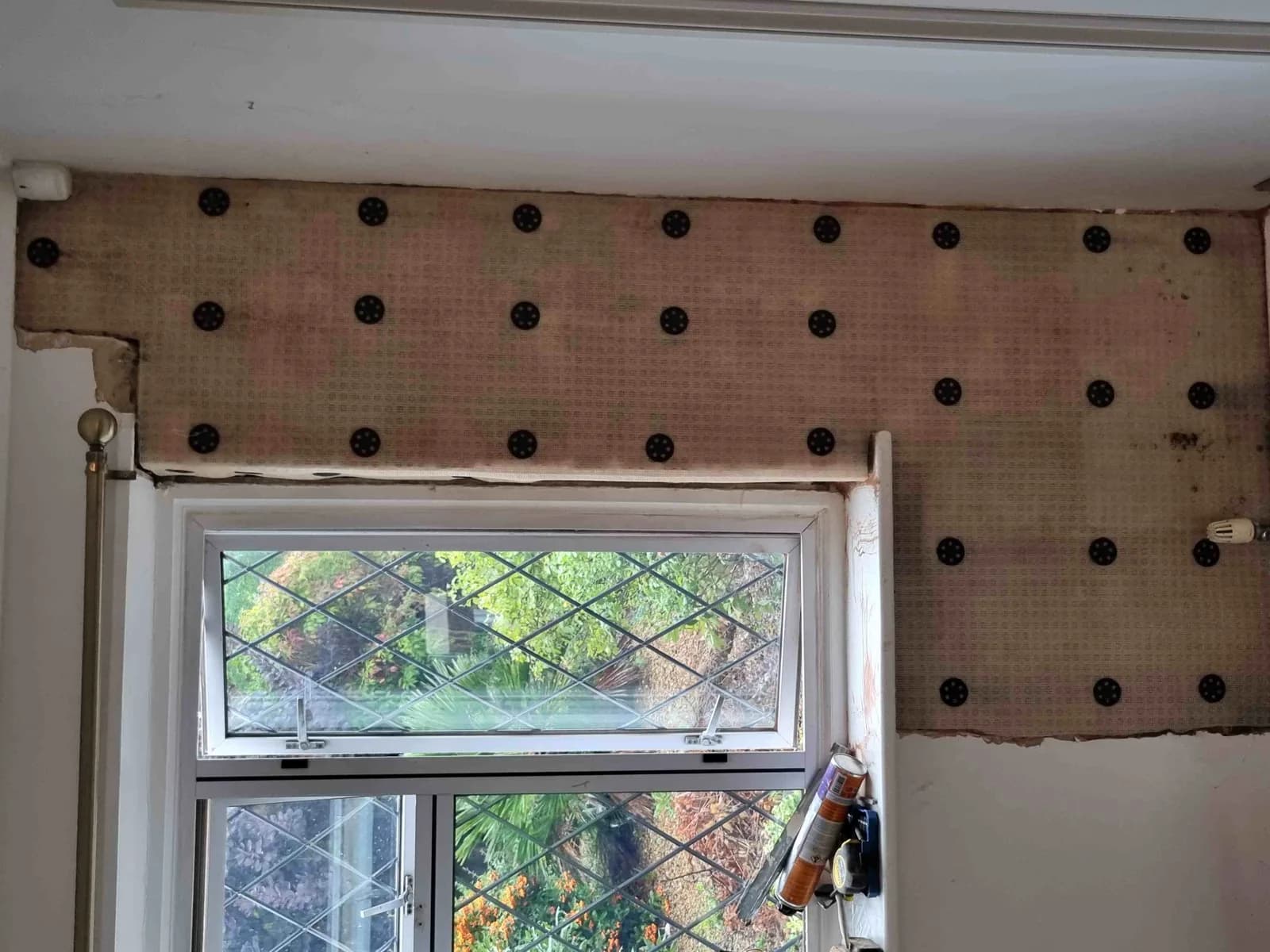
Damp Proofing
Damp proofing that starts with finding out what the damp actually is
Damp proofing treats the cause of moisture in a wall, not just the stain it leaves. The Brighton Plasterer diagnoses whether the problem is rising damp, penetrating damp or condensation, then installs an injected damp proof course, tanking system or breathable re-plaster to suit the property and its construction.
What the work covers
A great deal of what gets called rising damp in Brighton is not rising damp at all. It is a raised external ground level bridging the original slate course, a blocked or cracked gutter soaking one patch of wall every time it rains, a failed pointing detail on an exposed elevation, or straightforward condensation in a room with no meaningful ventilation. Each of those has a different fix and a different cost.
So the job starts with diagnosis. Moisture readings taken at height intervals up the wall, a look at the external ground level and the rainwater goods, and a proper conversation about how the room is heated and ventilated. Only then is it sensible to talk about treatment, because injecting a chemical damp proof course into a wall that is wet from a leaking downpipe achieves precisely nothing.
Where treatment is the right answer, the work is done to last. Injected damp proof course through the mortar bed, the wall hacked back and re-plastered with a salt-resistant renovating system or, in older breathable construction, a lime-based one. In basements and cellars, a tanking slurry or cavity drain membrane depending on how the space will actually be used.
- Damp survey first
- Moisture readings taken at intervals up the wall, plus an external inspection, before any treatment is priced. The reading pattern is what separates the three kinds of damp.
- Injected damp proof course
- A chemical damp proof course injected through the mortar bed where the original course has genuinely failed or was never there.
- Tanking and membranes
- Tanking slurry or a cavity drain membrane in cellars and basements, chosen around how the room will actually be used afterwards.
- Salt resistant re-plastering
- Renovating plaster systems that hold back the salts left in a wall after long term damp, or a breathable lime system where the construction demands it.
Problems this is the answer to
- A tide mark rising a metre or so up an internal wall, often with blown plaster above it
- Black mould in corners, behind furniture and around window reveals
- A patch of wall that darkens every time it rains hard from one direction
- White fluffy salt deposits pushing through paint or plaster
- A musty smell in a cellar or a ground floor room that never quite clears
- Skirtings and floor timbers that feel soft or have started to lift
Included as standard
- Damp survey and moisture readings before any treatment is quoted
- Chemical injected damp proof course into solid and cavity walls
- Salt-resistant renovating plaster and breathable lime re-plastering
- Cellar and basement tanking, slurry systems and cavity drain membrane
- Straight answers when the fix is guttering or ventilation, not a damp course
Before a price is given
How the job gets worked out
- 01
Take moisture readings at several heights on the same wall. A profile that falls off with height fits rising damp. A patch that is wet in the middle does not.
- 02
Go outside and look. A raised path or drive bridging the damp course is one of the most common causes across Sussex, and no injection will fix it.
- 03
Check the gutters, downpipes and gullies in the rain if possible. A single cracked joint soaks one strip of wall repeatedly.
- 04
Ask how the room is heated, ventilated and used. Damp on a cold external wall in an unventilated bedroom is usually condensation.
- 05
Look at the render, pointing and window details on the exposed elevation. Penetrating damp comes through a defect, not up from the ground.
The job, in order
Nothing here is a surprise on the day. You get told which stage you are at, what happens next and what has to dry before anything else can start.
Before James arrives
- Clear the affected wall and lift or move floor coverings back so the base of the wall can be seen and worked on.
- If you have had a survey or report from anyone else, have it to hand. Comparing findings is useful and costs nothing.
- Try to book the visit for a time you can talk through how the room is used, heated and ventilated. That conversation changes the diagnosis more often than people expect.
- Note when the damp appears. Only after heavy rain, all winter, or worse when the washing is drying indoors all point in different directions.
- Do not redecorate first. Fresh paint over a damp wall hides the evidence and will fail again.
01Survey and readings
The wall is read at height intervals, the outside is inspected, and the likely mechanism is explained before any figure is discussed.
02Fix the cause
Where the cause is external, that comes first. Ground levels lowered, gutters repaired, pointing or render made good, ventilation improved.
03Treat the wall
Where a damp proof course is genuinely the answer, holes are drilled into the mortar bed at set centres, the cream or fluid is injected and the holes are made good.
04Re-plaster and dry
Affected plaster is hacked off well above the damp line and replaced with a salt resistant or lime system, then left to dry before decorating.
Materials and systems
What gets specified, and when
- Injected damp proof course
- A silicone based cream or fluid injected into a drilled mortar bed to form a water repellent barrier. Suitable for solid and cavity masonry where the original course has failed.
- Renovating plaster system
- A backing coat and finish designed to hold hygroscopic salts back from the surface, used after a damp proof course so that the drying wall does not push salts into the new decoration.
- Breathable lime re-plaster
- Used on historic solid walls that need to release moisture rather than hold it. Slower and more expensive than a cement system, and the right answer on soft old fabric.
- Tanking slurry
- A cementitious coating applied to a prepared masonry background in a cellar, holding water back under pressure. Works where the structure is sound and the finish will sit tight to the wall.
- Cavity drain membrane
- A studded membrane that lets water run behind it to a drain or sump instead of fighting it. The usual choice where a cellar is being turned into a habitable room.
Property types
- Solid wall Victorian terraces with no original damp proof course
- Regency and early Victorian buildings on soft lime backgrounds
- Coastal properties taking wind driven rain on one elevation
- Cellars and basements under period houses
- Ground floor flats where external ground level has been raised over time
- Interwar semis with a slate course that has been bridged by later work
How long it takes
- Survey visit
- Usually under an hour for a single wall, longer for a whole ground floor or a cellar where the outside also needs walking round.
- Damp proof course injection
- Commonly a day for a typical ground floor room once the plaster is off, with the drilling and injection itself being the quicker part of the work.
- Re-plastering after treatment
- One to three days depending on the area, followed by a longer wait than normal before decorating because the wall behind is still giving up moisture.
- Drying out
- A treated solid wall can take several months to reach equilibrium, roughly a month for every 25mm of thickness. Decorating too early is the most common reason people think a treatment failed.
Straight answers
When damp proofing is not the right answer
Injecting a damp proof course into a wall that is wet from a leaking downpipe achieves nothing. The gutter is the fix.
Condensation is not cured by a damp course. It is cured by heating, ventilation and removing the cold spot.
Where the external ground level bridges the original course, lowering it is the first job and may be the only one needed.
A wall that is wet because the render above it has failed needs the render sorted before anything is done inside.
Where it gets done
Damp Proofing town by town
Each page below covers damp proofing in that town specifically: the buildings that are there, what tends to go wrong in them and what the job actually involves locally.
- Damp Proofing in Brighton BN1, BN2
- Damp Proofing in Hove BN3
- Damp Proofing in Worthing BN11 to BN14
- Damp Proofing in Lewes BN7
- Damp Proofing in Shoreham-by-Sea BN43
- Damp Proofing in Portslade BN41
- Damp Proofing in Peacehaven BN10
- Damp Proofing in Newhaven BN9
- Damp Proofing in Burgess Hill RH15
- Damp Proofing in Haywards Heath RH16, RH17
The other two things James does
Damp Proofing
Damp Proofing questions, answered
The things people ask before booking damp proofing, answered properly rather than in one line.
How do I tell rising damp from condensation?
Rising damp shows as a tide mark at the base of a wall with readings that fall as you go up, and often salt deposits. Condensation shows as mould on cold surfaces, in corners, behind furniture and around windows, and it is worse in winter and in unventilated rooms.
Is rising damp as common as people think?
No. A large share of what gets diagnosed as rising damp turns out to be a bridged damp course, a defective gutter or downpipe, a failed render detail or straightforward condensation. That is why the survey comes before the treatment.
Does an injected damp proof course actually work?
It works where the problem genuinely is moisture rising through the masonry and the wall is suitable for injection. It does nothing at all where the water is entering from somewhere else, which is why the diagnosis matters more than the product.
Why does the plaster have to come off?
Long term damp leaves hygroscopic salts in the plaster. Those salts pull moisture out of the air and keep the surface damp even after the wall behind has dried, so the contaminated plaster is removed rather than treated.
How long before I can decorate after damp proofing?
Longer than after ordinary plastering. The new plaster itself dries in a week or two, but the wall behind it carries on drying for months. A breathable emulsion first, and full decoration once the wall has settled, avoids paying twice.
Do you use a moisture meter or just look at the wall?
Both. A meter gives the profile of readings up the wall, which is the useful part, and a walk round the outside gives the reason for that profile. Neither on its own is enough to price a job honestly.
Can damp be treated in a listed or historic building?
Yes, but the approach changes. Soft historic fabric usually needs breathable lime rather than a dense cement renovating system, and altering historic fabric can need consent. That gets flagged before work starts rather than afterwards.
What is tanking and when is it needed?
Tanking is a waterproof coating applied to a cellar or basement wall to hold water back. It suits sound masonry and a tight finish, whereas a cavity drain membrane is usually the better choice if the space is becoming a habitable room.
Will improving ventilation on its own fix damp?
It will if the problem is condensation, and quite often it is. Trickle vents, an extractor that actually vents outside, and not drying washing on radiators in a closed room make a measurable difference at very little cost.
Do you charge for a damp survey?
The visit and the written price are free and carry no obligation. If the honest answer is that you need a roofer or a guttering repair rather than a damp course, that is what you will be told.
Need damp proofing doing?
Describe the job and James will tell you what it actually wants, with a written price before anything starts. Covering 10 towns across Sussex.