
West Sussex, RH16, RH17
Haywards Heath damp proofing for villa chimney breasts and cellar walls
The Brighton Plasterer carries out damp proofing throughout Haywards Heath, RH16 and RH17, including Lindfield, Cuckfield and Franklands Village. Damp here often traces back to a chimney flue, a cellar wall or a failed gutter on a large Victorian villa, so James diagnoses the route before treatment is priced.
Damp Proofing in Haywards Heath, and what is different about it
The big Victorian and Edwardian villas around Muster Green and the station roads are lovely buildings with a lot of surfaces for water to get in through. Tall stacks, deep valleys, long runs of cast gutter, cellars cut into sloping ground and solid walls with no cavity. Damp in RH16 usually arrives by one of those routes rather than climbing quietly up from the footings.
Chimney breasts are the classic case here and the one most often misread. A flue that has been in use for a century holds soot, and soot carries sulphates and other salts. Cap the stack badly or let the flashing fail, and rain running down the flue brings those salts through into the plaster, where they stain paint, feel cold and read high on a meter. It looks exactly like damp coming up the wall and it is nothing of the kind. Cellars and undercrofts are the other big one, since the ground presses against the wall from outside.
So the survey follows the water backwards. On a chimney breast James looks at the stack, the pot, the flashing and whether the flue has been capped without a vent, then checks whether the staining is confined to the breast while the walls either side stay dry. On a cellar wall the questions are ground level, drainage and what the room is going to be used for. On a plain external wall it is the usual list: gutter, downpipe, pointing, border height and the state of the ground against the brick.
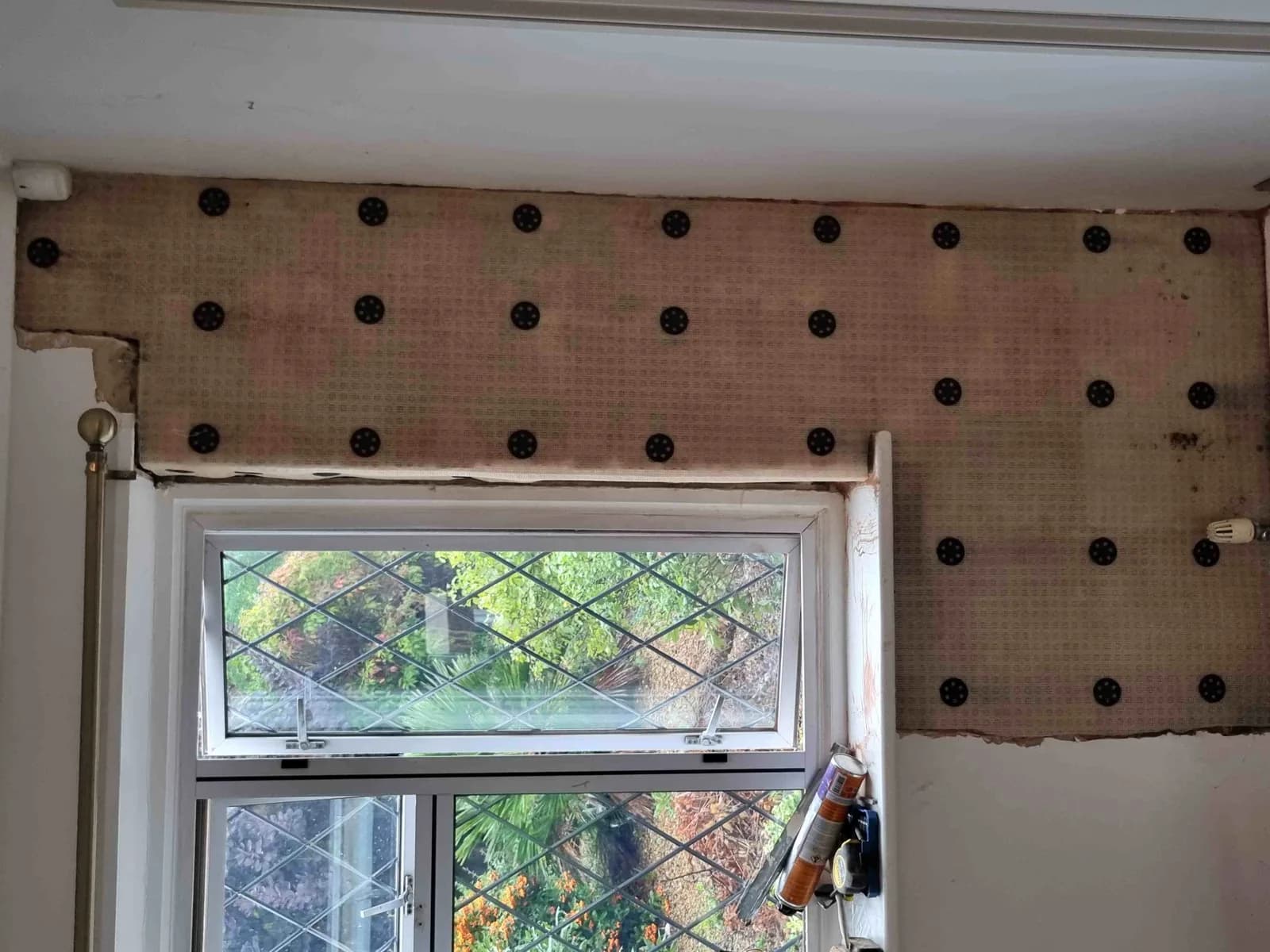
The repairs are as varied as the causes. A salt-stained chimney breast needs the roof detail sorted and the flue vented, then the plaster hacked off and replaced with a salt-resistant renovating system, because painting over it simply feeds the next stain. A cellar being brought into use takes tanking or a cavity drain membrane rather than an injection. Solid villa walls with a genuinely failed course are injected and re-plastered. Out in Lindfield and Cuckfield, where cottages are timber framed and lime plastered, the specification changes to breathable materials and slower drying.
Also covered from Haywards Heath: Lindfield, Cuckfield, Franklands Village, Ansty, Scaynes Hill. For the full picture of Haywards Heath and every service there, see the Haywards Heath page.
What Haywards Heath needs watching for
Flues vented, not sealed
A chimney capped with no ventilation traps moisture in the stack and pushes it into the breast. Venting the flue is part of curing the stain rather than an optional extra.
Cellars treated for use
How a cellar or undercroft will actually be used decides between a tanking slurry and a cavity drain membrane. That conversation happens before anything is specified.
Villa gutters walked
A long cast iron gutter on a station-road villa can be blocked over one bay only. Finding that stretch explains a damp wall that has puzzled people for years.
Damp Proofing nearby
How the job runs
Step by step in Haywards Heath
The order below is how a damp proofing job actually runs on the kind of property Haywards Heath is made of. For the full method and the materials behind it, see the damp proofing page.
01Trace the route in
James follows the moisture backwards from the stain to the roof detail, gutter, flue or ground level that is actually letting the water reach the wall.
02Readings across the breast
Moisture is measured on the chimney breast and on the flanking walls, since salt contamination stays on the breast and ground water does not.
03Source fixed, flue vented
Flashing, capping and rainwater goods are put right and the flue is given ventilation before any plaster goes back on the wall.
04Renovating or lime finish
The breast or wall is re-plastered with a salt-resistant system, or in lime on Lindfield and Cuckfield fabric, then left to dry properly.
Straight answers
When it is not the right answer here
- A stained chimney breast will keep staining until the flashing, capping and flue ventilation are sorted out on the roof.
- Where a cast iron gutter is blocked above the damp patch, clearing it is the repair and the plaster is only the making good.
- Condensation in an unheated top-floor room of a big villa needs warmth and airflow, not a damp course.
Also done in Haywards Heath
Damp Proofing, Haywards Heath
Damp Proofing in Haywards Heath, questions answered
What people in Haywards Heath ask before booking damp proofing, answered properly rather than in one line.
Why is the plaster on my chimney breast staining through fresh paint?
Because salts from the old flue are coming to the surface and drawing moisture with them. Emulsion goes on, dries, and the mark reappears within weeks. The roof detail has to be corrected and the contaminated plaster replaced with a salt-resistant system.
Is damp on a Victorian villa wall usually rising damp?
Far less often than people assume. With tall stacks, long gutters, deep valleys and solid walls, water usually gets in higher up and travels down. The pattern and the height of the moisture normally point at the real route within a few minutes.
Can a cellar under a Haywards Heath house be made dry enough to use?
Usually, but the method depends on what the room is for. Storage is a lower bar than a habitable room. Tanking or a cavity drain membrane with a drainage channel both work, and the choice is discussed honestly before anything is priced.
Should a disused chimney be capped or left open?
Capped, but never sealed dead. A cap that sheds rain while allowing air to move keeps the stack dry. Sealing both ends traps moisture inside the flue, and it comes out through the breast as staining and blown plaster.
How long does a treated chimney breast take to dry before decorating?
Several weeks is realistic, and rushing it is how the first coat of paint gets marked. The new plaster and the masonry behind it both have to lose moisture, so a breathable emulsion is the sensible first finish.
What does James check on a damp survey in Haywards Heath?
Readings on the affected wall and its neighbours, the chimney and roof details if a breast is involved, gutters and downpipes, ground and border levels, and cellar drainage. The finding is explained on the day, free and with no obligation.
Do Lindfield and Cuckfield cottages need a different damp treatment?
Yes. Timber framed and lime plastered fabric has to keep breathing, so hard cement repairs and modern gypsum finishes are the wrong materials. Lime plaster, lime pointing and controlling the water outside are the right approach there.
Does damp proofing a villa mean losing the original plaster?
Only where the plaster is genuinely blown or salt contaminated, and then only as far as it needs to go. Sound original plaster is kept, and James will tell you plainly which is which before anything is hacked off.
Damp Proofing in Haywards Heath? Call James
Free quotes across Haywards Heath and Lindfield, Cuckfield, with a written price before anything starts.