
East Sussex, BN7
Lewes damp proofing on flint, timber frame and the Ouse floodplain
The Brighton Plasterer carries out damp proofing in Lewes and BN7, including Cliffe, Southover and the High Street. Much of the town is historic and sits near the Ouse, so James diagnoses before treating and often specifies breathable lime repair and better drainage instead of a chemical damp course.
Damp Proofing in Lewes, and what is different about it
Damp in Lewes is common, and the standard treatment for it is frequently the wrong one. The town centre is timber frame, flint and soft handmade brick bedded in lime, sitting in a river valley where the ground rarely dries out and where parts of Cliffe have taken flood water. Walls like that were designed to get wet and then let go of it again.
So the first question in a Lewes house is usually not whether the wall is damp but why it cannot dry. Centuries of resurfacing have lifted street and yard levels against the base of buildings along the High Street and in Cliffe. Modern cement pointing and cement render, applied with good intentions, have sealed elevations that used to breathe, so water entering at a roof or a splash line travels sideways and comes out through the plaster. Flood water leaves salts behind in the fabric that keep pulling moisture out of the air years afterwards.
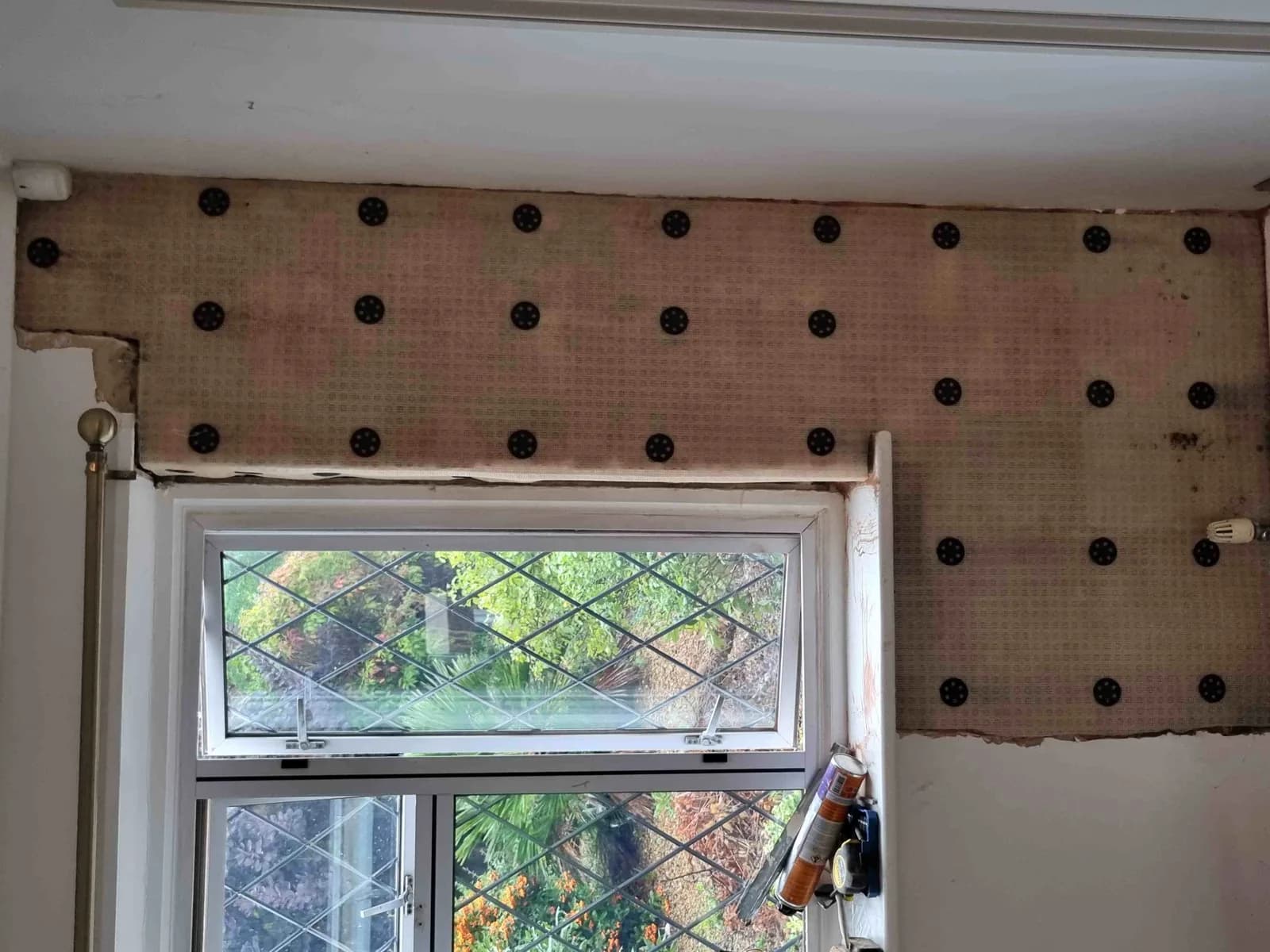
Working that out takes longer here than it does on a modern estate, and it is worth the time. James reads moisture at heights up the wall and across it, notes where a timber frame member sits behind the plaster, and looks for the cement patch or the impermeable paint that is holding the wall wet. Outside he checks levels, gullies, the bottom of the render and whether a downpipe discharges onto the wall. A meter reading on a salt-laden wall reads high whatever the weather, which is exactly the trap that sells unnecessary damp courses.
Treatment in the historic core is mostly about removing obstacles to drying. Cement render and pointing come off and lime goes back, ground levels are dropped where they can be, drainage is put right, and the internal finish is a lime plaster that lets moisture keep moving. That approach takes longer and asks for patience while the wall gives up its water, but it leaves the building better than it found it. An injected course still has its place on the Nevill, Landport and the later estates, where walls are ordinary brick and the mechanism is ordinary too.
Also covered from Lewes: Cliffe, Southover, Kingston near Lewes, Ringmer, Barcombe. For the full picture of Lewes and every service there, see the Lewes page.
What Lewes needs watching for
Cement removed, not added
A cement patch or a plastic paint on a lime wall in Lewes is usually part of the problem. Taking it off and letting the wall breathe is often most of the treatment.
Flood salts allowed for
Property that has taken water from the Ouse holds hygroscopic salts for years. Those keep a meter reading high and need a renovating or lime system rather than a fresh gypsum skim.
Timber frame kept dry
Trapping moisture against structural oak does real harm. Where a frame sits behind the plaster the specification has to let the timber dry, which rules a sealed system out.
How the job runs
Step by step in Lewes
The order below is how a damp proofing job actually runs on the kind of property Lewes is made of. For the full method and the materials behind it, see the damp proofing page.
01Survey the fabric first
Readings are taken up and across the wall, and the construction behind the plaster is identified, because flint, brick and timber frame all behave differently.
02Levels and drainage checked
Street, yard and garden levels, gullies, downpipes and the base of any render are inspected outside, since raised ground is a frequent cause in the old town.
03Barriers to drying removed
Cement pointing, hard render and impermeable paint are taken off where they are holding water in, and the wall is given time before anything new is applied.
04Lime finish and patience
The wall is re-plastered in lime or a renovating system as appropriate, then left to cure and dry for weeks, with a breathable paint used first.
Straight answers
When it is not the right answer here
- On soft historic fabric an injected damp course is often neither appropriate nor effective, and lowering ground levels achieves more.
- A high meter reading on a wall that took flood water may be salt rather than active moisture, so treatment should wait for a proper diagnosis.
- If rain is entering at a roof, valley or parapet, the damp inside is a roofing job before it is a plastering one.
Damp Proofing, Lewes
Damp Proofing in Lewes, questions answered
What people in Lewes ask before booking damp proofing, answered properly rather than in one line.
Does an old Lewes house with damp need a chemical damp course?
Often it does not. Solid historic walls of flint, soft brick or timber frame have no consistent mortar bed to inject and were never meant to be sealed. Ground levels, drainage and breathable finishes usually deal with the problem more effectively.
How do I know if damp in a Lewes wall is rising or coming from a leak?
Height and shape are the clues. Moisture drawn up through the wall tails off and stops, and it stays much the same in wet and dry weather. A leak or a failed gutter produces a patch that spreads from a point and reacts sharply to rain.
What does flood water do to plaster and walls in Cliffe?
It soaks the fabric and then leaves dissolved salts behind as it dries. Those salts attract moisture from the air for years afterwards, so a wall can feel damp and read high long after the water itself has gone. Contaminated plaster has to come off.
Can damp be treated behind a timber-framed wall?
Yes, but carefully. The aim is always to let the timber dry, so a sealed or cementitious system is the wrong choice. Lime plaster, breathable paint and sorting whatever is wetting the frame in the first place is the sensible route.
Why does removing cement render help a damp Lewes wall?
Because cement is far less permeable than the lime wall behind it. Water that gets in past a crack cannot evaporate through the render, so it moves through the wall and appears inside instead. Replacing it with lime gives the moisture a way out.
How long does a lime-repaired wall take to dry before decorating?
Considerably longer than a gypsum finish, because lime cures by carbonation as well as drying. Allow weeks, and longer through a damp winter. A breathable paint for the first period lets the wall carry on losing moisture.
Do you carry out damp surveys on listed buildings in Lewes?
Yes. James takes readings, identifies the construction and looks at what is stopping the wall drying, then sets out the least invasive option. Where altering historic plaster or render is likely to need consent, he will say so before anything is booked in.
Is damp proofing different on the Nevill and the newer Lewes estates?
Very. Those houses are ordinary modern construction with a proper damp course, so the causes are ordinary too: a raised border, a blocked gutter or condensation. Where a course has genuinely failed, an injected system and a renovating re-plaster suit them perfectly well.
Damp Proofing in Lewes? Call James
Free quotes across Lewes and Cliffe, Southover, with a written price before anything starts.