
East Sussex, BN9
Newhaven damp proofing where salt in the plaster is half the problem
The Brighton Plasterer provides damp proofing in Newhaven and BN9, from the hillside terraces above the port to Denton and Harbour Heights. Years of salt-laden air leave old plaster contaminated, so James separates active moisture from salt before deciding whether an injected course, tanking or a renovating re-plaster is needed.
Damp Proofing in Newhaven, and what is different about it
Newhaven has more genuinely damp walls than most towns on the round, and it also has more walls that only look damp. Decades beside a working port load old plaster with salt, and salt pulls water out of the air whether or not anything is wrong with the wall behind it. Telling the two apart is where the money is saved in BN9.
Hygroscopic salt is the piece most people have never heard of. Chlorides and nitrates build up in plaster over decades, from sea air, from old chimney flues and from long-past leaks, and they then take up moisture from the room itself. The result is a wall that stays dark and cold, reads high on a meter, keeps staining fresh paint and never dries however long you wait. Alongside that, the town has plenty of real problems too: solid hillside terraces with no original course, yards resurfaced above the slate, and downpipes discharging onto brickwork.
Separating them is a matter of pattern rather than one reading. Salt-driven dampness moves with the humidity in the room, so it is worst on a muggy day and eases in a dry heated week, while a wall drawing water from the ground does not care. Height matters too, since capillary moisture tails away and stops, whereas a contaminated band sits wherever the old plaster line was. James measures at intervals, notes the shape of the tide mark, checks the yard level and the rainwater goods, and asks what the room was used for.
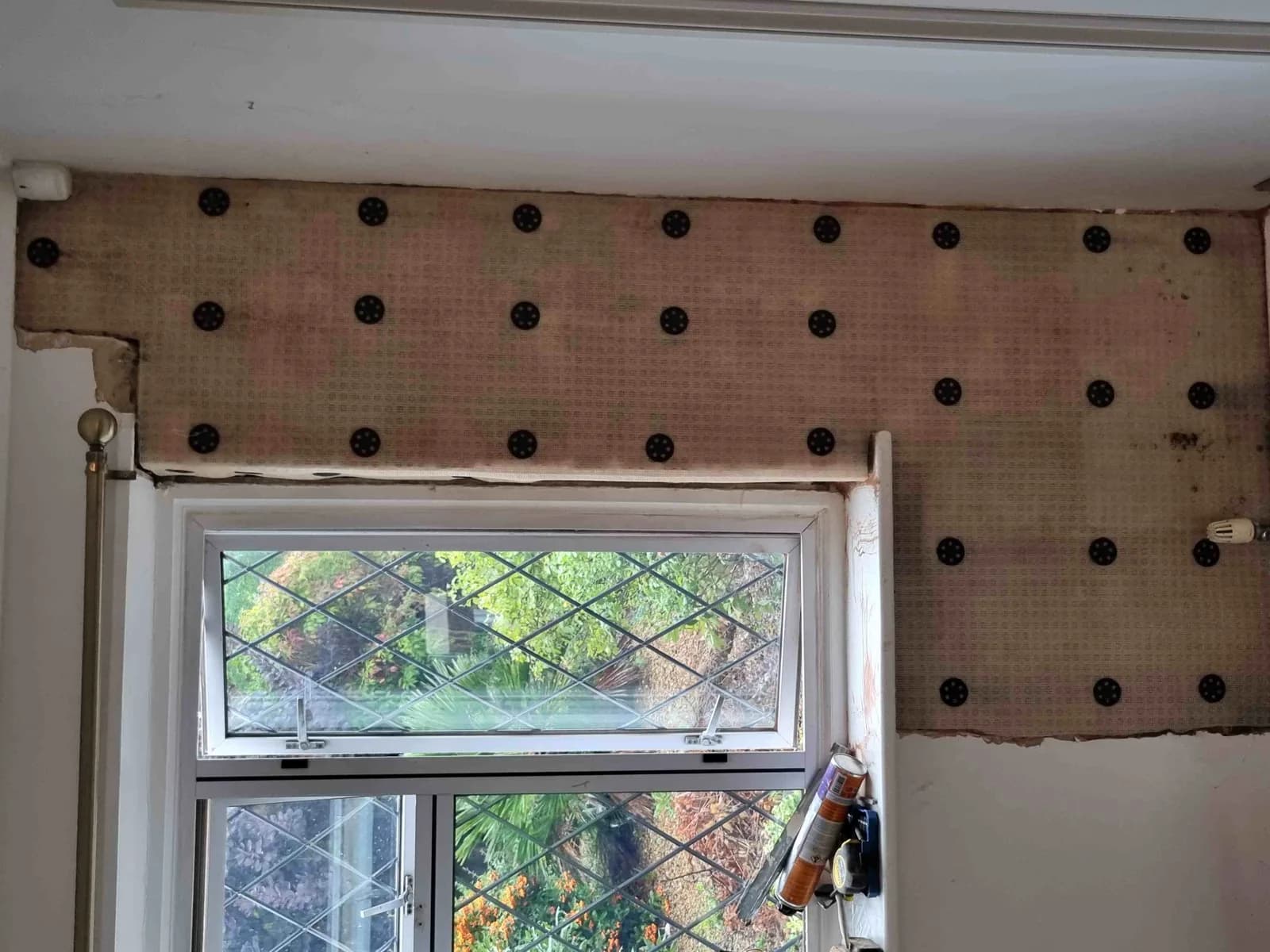
Where salt is the whole story, the cure is removal rather than injection. The contaminated plaster comes off well beyond the visible mark, the wall is allowed to dry, and a renovating system goes on to hold any remaining salts back from the new surface. Where a course really has failed on a solid wall, that gets injected and finished the same way, and where a lower ground room is going to be used properly a membrane or tanking system is the better answer. Denton and Harbour Heights, being later cavity housing, rarely need any of it.
Also covered from Newhaven: Denton, Harbour Heights, South Heighton, Bishopstone. For the full picture of Newhaven and every service there, see the Newhaven page.
What Newhaven needs watching for
Salt separated from water
A wall can read wet because of what is in the plaster rather than what is in the ground. That distinction decides whether anything needs injecting at all.
Chimney breasts checked
Old flues in the port terraces carry sulphates and soot salts into the plaster, which is why a breast often stains through paint while the rest of the room stays clean.
Plaster removed generously
Contaminated plaster is taken off well past the visible tide mark, because stopping at the stain leaves the salts that will bleed straight back through.
Damp Proofing nearby
How the job runs
Step by step in Newhaven
The order below is how a damp proofing job actually runs on the kind of property Newhaven is made of. For the full method and the materials behind it, see the damp proofing page.
01Readings over the tide mark
Moisture is measured above, at and below the stain so the shape of the problem is recorded and capillary rise can be told from a contaminated band.
02Yard and gutter check
Levels in the back yard, the state of the downpipes and any render at the base of the wall are inspected before treatment is considered.
03Hack off and dry out
Old plaster comes off generously, the wall is left open to dry, and the injected course goes in only where the survey shows a genuine failure.
04Renovating plaster applied
A salt-resistant system is used so remaining salts stay in the wall, then weeks of drying are allowed before a breathable paint goes on.
Straight answers
When it is not the right answer here
- If the wall dries when the room is heated and reappears in muggy weather, the problem is salt and injecting will not touch it.
- A downpipe discharging onto a hillside terrace will keep the wall wet no matter what is put into the mortar bed.
- Rooms with no heating and no extraction produce condensation, which needs airflow rather than damp proofing.
Damp Proofing, Newhaven
Damp Proofing in Newhaven, questions answered
What people in Newhaven ask before booking damp proofing, answered properly rather than in one line.
What are hygroscopic salts and how do they affect a Newhaven wall?
They are salts that attract water from the air. Decades of sea air, old flues and past leaks leave them in the plaster, and they then keep the surface damp and cold even when nothing is entering the wall. The plaster has to come off to clear them.
Why does my wall look damp in muggy weather and dry when the heating is on?
That swing is the clearest sign of salt contamination rather than moisture coming from the ground. Water drawn up through a wall is fairly steady, whereas hygroscopic salts follow the humidity in the room from one day to the next.
Does a chimney breast staining through paint mean rising damp?
Usually not. Soot and combustion residues leave sulphates in the plaster of an old flue, and rain getting down a stack brings them through to the surface. Sorting the roof detail and replacing the contaminated plaster is the real repair.
How far back does old plaster need hacking off in a port-side house?
Well beyond the visible mark, both above it and to either side, because the salts always spread further than the stain does. Stopping at the edge of what you can see is the single commonest reason a treated wall marks again.
Can a damp course be injected into a solid wall with no cavity?
Yes. The cream or fluid is introduced through a line of holes in a mortar bed and spreads to form a barrier. It only works if the wall is genuinely suffering capillary rise, which is exactly what the survey is for.
What should I expect to happen after a Newhaven wall is treated?
A period of drying, and it is slower than most people hope. The wall gives up moisture through the new plaster for weeks, so decoration waits, and a breathable paint is used at first rather than something that seals the surface.
Do you take damp readings before pricing work in Newhaven?
Yes, every time. Readings up the wall, an external check of levels and rainwater goods, and a conversation about heating and use come before a figure. Pricing a damp course without that is guesswork dressed up as expertise.
Is damp less of a problem up at Denton and Harbour Heights?
Generally yes. Those are later cavity-built houses with a proper damp course, so what turns up there is usually condensation, a rainwater fault or a bridged cavity rather than anything needing chemical treatment.
Damp Proofing in Newhaven? Call James
Free quotes across Newhaven and Denton, Harbour Heights, with a written price before anything starts.