
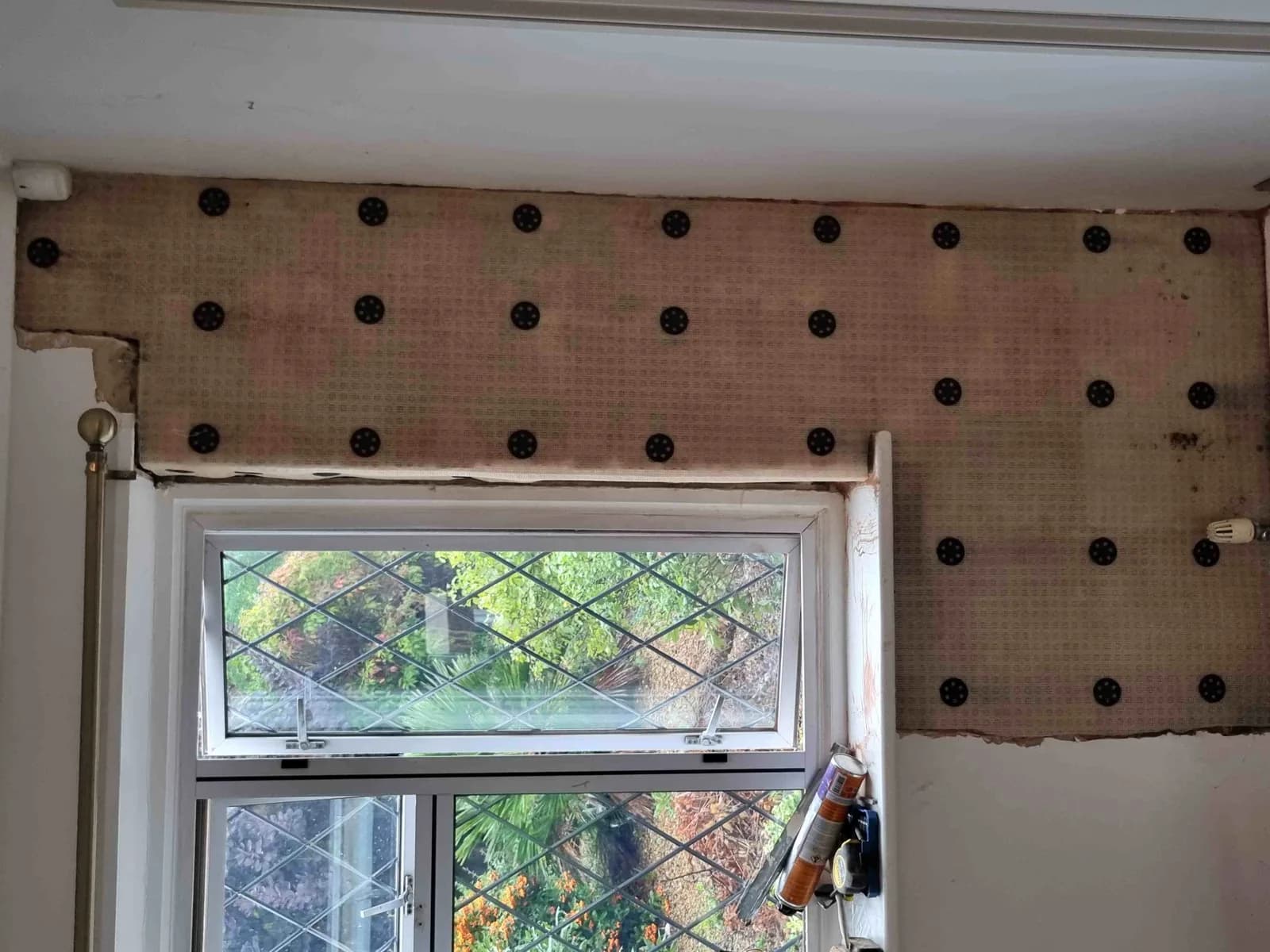
East Sussex, BN10
Peacehaven damp proofing for the seaward wall of a clifftop bungalow
The Brighton Plasterer carries out damp proofing across Peacehaven, Telscombe Cliffs and BN10. On an exposed clifftop plot the damp is usually rain driven through a failed render on the seaward wall, so James checks the render and the background behind it before recommending any damp course or re-plaster.
Damp Proofing in Peacehaven, and what is different about it
Peacehaven takes weather that most of Sussex never sees. The town sits on the clifftop with the Channel on one side and open downland on the other, so rain arrives sideways and keeps arriving. Add housing that began as plotland building in the 1920s, much of it rendered afterwards over whatever was already there, and the damp pattern here is very particular.
The giveaway in BN10 is that the damp obeys the wind. One elevation, usually the one facing the sea, shows staining and blown plaster while the other three walls of the same house are bone dry. That is not how a failed damp course behaves. What is happening is rain being pushed through a crazed or debonded render, around a tired window reveal or past a perished seal, then finding the inside face of the wall. On plots where the render was applied later over a variable background, sections of it may never have bonded properly at all.
So the survey here spends as much time outside as in. James taps the render across the seaward elevation to map hollow areas, looks closely at reveals, sills, seals and the base of the wall, and checks whether the coat is sitting on something it can hold on to. Inside, readings are taken up the affected wall and compared with the sheltered walls of the same room. The other question worth asking in a bungalow is ventilation, because a single-storey house with small rooms, sealed windows and no through draught traps moisture very effectively.
Treatment nearly always starts on the outside. Failed render comes off back to a sound background, and the new system is chosen to shed wind-driven rain and stay stuck to what is behind it, with bellcast at the base and proper stop beads at the openings. Seals and reveals are made good at the same time. Only then is the inside worth touching, and where old plaster has been wet long enough to take up salts it is hacked off and replaced with a renovating system. A bungalow is at least a cheap building to work on, since scaffolding is often unnecessary.
Also covered from Peacehaven: Telscombe Cliffs, Saltdean, Rottingdean, East Saltdean. For the full picture of Peacehaven and every service there, see the Peacehaven page.
What Peacehaven needs watching for
One wet wall only
When a single elevation is wet and the rest of the house is dry, the wind is the cause. That pattern rules a failed damp course out before anything is quoted.
Plotland backgrounds vary
Render in this town sits on all sorts of original construction. James checks what the coat is bonded to, because a new system on a poor background fails the same way.
Bungalow airflow considered
Small single-storey rooms with sealed windows hold moist air. Where the walls are dry and the corners are mouldy, extraction and ventilation are the honest recommendation.
Damp Proofing nearby
How the job runs
Step by step in Peacehaven
The order below is how a damp proofing job actually runs on the kind of property Peacehaven is made of. For the full method and the materials behind it, see the damp proofing page.
01Tap the seaward elevation
The exposed wall is tapped across its face to map hollow and debonded render, which is where wind-driven rain is getting past the finish.
02Compare wall readings
Moisture is measured on the wet wall and on the sheltered walls of the same room, so the difference between weather and ground water is clear.
03Render and seals renewed
Failed coats come off, the background is made sound, and the new render is detailed with bellcast and stop beads so water throws clear of the wall.
04Inside made good last
Salt-contaminated plaster is removed and a renovating system applied once the wall is drying, with a realistic wait quoted before decorating.
Straight answers
When it is not the right answer here
- An injected damp course cannot stop rain being blown through a failed render on the seaward wall.
- If every wall is dry except the patch where the wardrobe stands, that is condensation and not a fabric problem.
- Water running off a flat roof or a blocked gutter onto a rendered wall keeps it wet whatever is applied inside.
Damp Proofing, Peacehaven
Damp Proofing in Peacehaven, questions answered
What people in Peacehaven ask before booking damp proofing, answered properly rather than in one line.
Can wind-driven rain pass straight through a rendered wall?
It does not go through sound render, but it goes through a crazed or hollow one very easily. Once water is behind the coat it tracks across the background and comes out on the inside face, which is why the elevation gets tapped before anything else.
Does a 1920s plotland house in Peacehaven have a damp course?
Some do and some do not, and a fair number have something improvised. That is why James establishes what the wall is actually made of before discussing treatment, rather than assuming the property follows a standard specification.
Should the old render come off before damp work starts?
If it is hollow or debonded, yes. Rendering over a coat that has already let go simply passes the failure on to the new work, and any internal repair done underneath it will be undone by the next wet winter.
How do I tell condensation from damp in a Peacehaven bungalow?
Condensation appears on the coldest surfaces, in corners, behind furniture and around window reveals, and it is worst in unheated rooms. Penetrating damp follows the weather and concentrates on the exposed elevation. Readings and a look outside confirm which you have.
How long after re-rendering can the inside walls be re-plastered?
The wall needs time to give up the water it has been holding, so the internal work is planned rather than rushed straight after the scaffold comes down. James will give you a realistic sequence and date rather than an optimistic one.
What does James look at during a Peacehaven damp survey?
The render across the exposed elevation, reveals, sills and seals, the base of the wall and the ground around it, then moisture readings inside compared between the wet wall and the dry ones. The findings are explained on the day.
Will a renovating plaster stop the stains coming back through?
It is designed to, by holding residual salts in the wall rather than letting them travel into the new surface. It only works if the source of the water has been dealt with first, which is why the external repair comes before the internal one.
Is damp treated any differently in Telscombe Cliffs?
Not really. Telscombe Cliffs runs straight into Peacehaven and shares the same clifftop exposure and much of the same building history, so the approach is identical: check the render and the weather side first, then look inside.
Damp Proofing in Peacehaven? Call James
Free quotes across Peacehaven and Telscombe Cliffs, Saltdean, with a written price before anything starts.