
West Sussex, RH15
Burgess Hill damp proofing on Weald clay, patios and sealed estate homes
The Brighton Plasterer covers damp proofing across Burgess Hill and RH15, including Hassocks, Wivelsfield and Ditchling Common. Inland there is no salt air, so damp here is usually a raised patio bridging the course, a blocked gutter or condensation in a well-sealed house, and James checks all three first.
Damp Proofing in Burgess Hill, and what is different about it
Nothing about damp in Burgess Hill is coastal. The town is inland at the foot of the Downs, built mostly since the 1960s, and it sits on Weald clay. Clay holds water against a building, modern houses are sealed tight to keep the heat in, and the two together produce a very different set of problems to anything on the seafront.
Three causes cover most RH15 call-outs. The first is landscaping. Weald clay drains slowly, and a patio, a raised border or a new driveway laid up against the house holds standing water exactly where the damp course used to be visible, so moisture simply steps over it. The second is rainwater. A gutter blocked with leaves over one bay, or a downpipe joint that has opened, will soak a single stretch of wall for years. The third is condensation, which is now the commonest of the lot in an estate house with sealed units and taped-over vents.
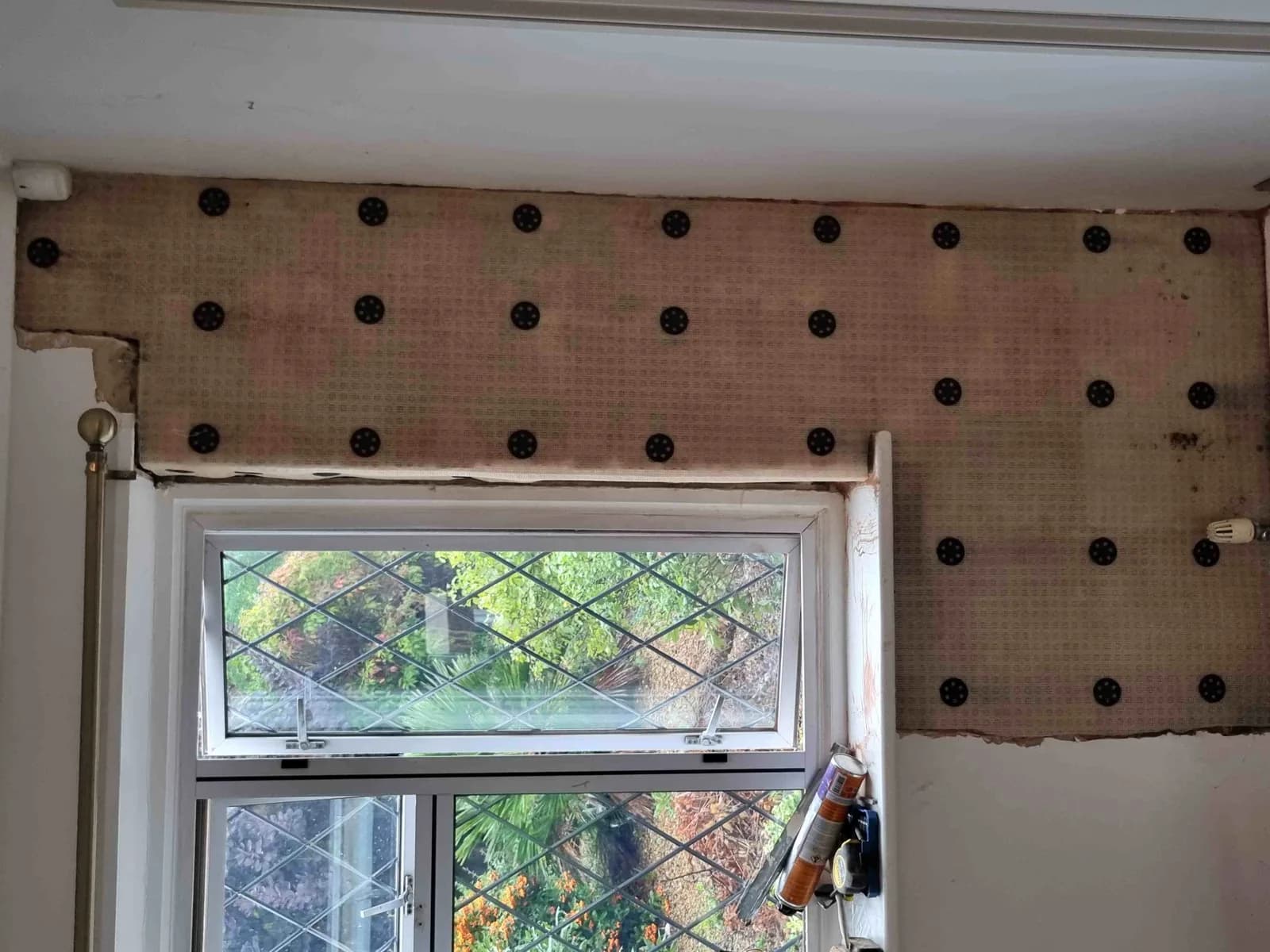
None of those needs a chemical to fix, which is why the survey matters more than the product. James measures moisture on the affected wall and on the wall behind it, walks the outside of the house with a tape against the damp course line, and looks up at the gutters while somebody runs a hose if there is any doubt. Cavity walls add one more question, because a bridged cavity, whether from mortar on the ties or badly installed insulation, will show as a damp patch well above the floor with dry brickwork underneath.
When the answer is the ground, it is a spade and a bit of drainage rather than a damp proofing contract: drop the level well below the damp course, form a gravel margin, and get surface water away from the wall. When it is rainwater, the gutter or downpipe is repaired and the wall is left to dry before anything is re-plastered. Genuine course failure does occur in the older cottages around the town, and an injected course with a salt-resistant re-plaster is the right answer there. Condensation gets extraction, heating and airflow.
Also covered from Burgess Hill: Hassocks, Wivelsfield, Ditchling, Ditchling Common, Keymer. For the full picture of Burgess Hill and every service there, see the Burgess Hill page.
What Burgess Hill needs watching for
Patio levels measured
A patio or border sitting above the damp course is the commonest cause of damp in this town. Lowering it costs less than any treatment and it actually works.
Bridged cavities identified
A damp patch high on a cavity wall with dry brick below it points to mortar on the ties or misplaced insulation, not to anything rising from the ground.
Sealed houses need air
Modern estate homes in RH15 lose almost no heat and almost no moisture. Where vents have been blocked and extractors disconnected, that is the finding and it is said plainly.
Damp Proofing nearby
How the job runs
Step by step in Burgess Hill
The order below is how a damp proofing job actually runs on the kind of property Burgess Hill is made of. For the full method and the materials behind it, see the damp proofing page.
01Measure inside and out
Readings are taken on the damp wall and its neighbours, then the outside ground level is checked against the damp course along the whole affected elevation.
02Rainwater goods tested
Gutters, joints and downpipes over the wet area are inspected, and run with water where the cause is not obvious from the ground.
03Ground or gutter put right
Levels are lowered and drainage improved, or the rainwater fault is repaired, and the wall is then given time to dry before internal work.
04Re-plaster where needed
Blown and salt-marked plaster is cut out and finished with a renovating or standard system, depending on what the wall has actually been through.
Straight answers
When it is not the right answer here
- Most damp in this town is a raised patio or a blocked gutter, and neither is improved by injecting the wall above it.
- Mould in the corner of a sealed modern bedroom is condensation, answered by extraction, heating and open trickle vents.
- Cracks from clay movement can let rain in, in which case the crack is repaired rather than the wall treated.
Also done in Burgess Hill
Damp Proofing, Burgess Hill
Damp Proofing in Burgess Hill, questions answered
What people in Burgess Hill ask before booking damp proofing, answered properly rather than in one line.
Can you get rising damp in a modern Burgess Hill house?
It is rare, because those houses were built with a damp course and it does not simply wear out. What is far more common is that something now bridges it outside, or that the moisture is condensation rather than anything coming from the ground.
Is my damp caused by the patio being too high?
It is worth measuring before anything else. If the finished paving sits at or above the damp course, water crosses the barrier and appears inside. Lowering the level and forming a drained margin at the wall usually removes the problem entirely.
How do I tell condensation from a plumbing leak in a modern house?
Condensation spreads across cold surfaces and is worst in winter and in unheated rooms. A leak produces a defined patch that stays wet regardless of the weather and often grows steadily. Readings and a look at what runs behind the wall settle it.
Does Weald clay make damp worse in Burgess Hill?
It contributes, because clay drains slowly and holds water against foundations and low brickwork after heavy rain. It rarely causes damp on its own, but it makes any bridged course or poor surface drainage show up much faster.
What happens if damp is bridging the cavity in my house?
Water crosses from the outer leaf to the inner one, usually over mortar left on a wall tie or through insulation that has slumped. The tell is a damp patch part way up the wall with dry brick below, and the cavity itself has to be dealt with.
When can I decorate after damp work on a Burgess Hill wall?
Once the wall has genuinely dried, which takes weeks rather than days if it has been wet for a while. James gives you a date for the specific room, and a breathable paint for the first period keeps the drying going.
What is included in a damp survey in Burgess Hill?
Moisture readings inside, a walk round the outside checking levels against the damp course, an inspection of gutters and downpipes, and questions about heating and ventilation. You get the actual finding, even when it is that no treatment is needed.
Is damp work covered in Hassocks, Ditchling and Wivelsfield too?
Yes, all from the same round. The housing mix out that way is older on average, with period cottages under the Downs, so lime and breathable finishes come back into the picture on some of those jobs.
Damp Proofing in Burgess Hill? Call James
Free quotes across Burgess Hill and Hassocks, Wivelsfield, with a written price before anything starts.